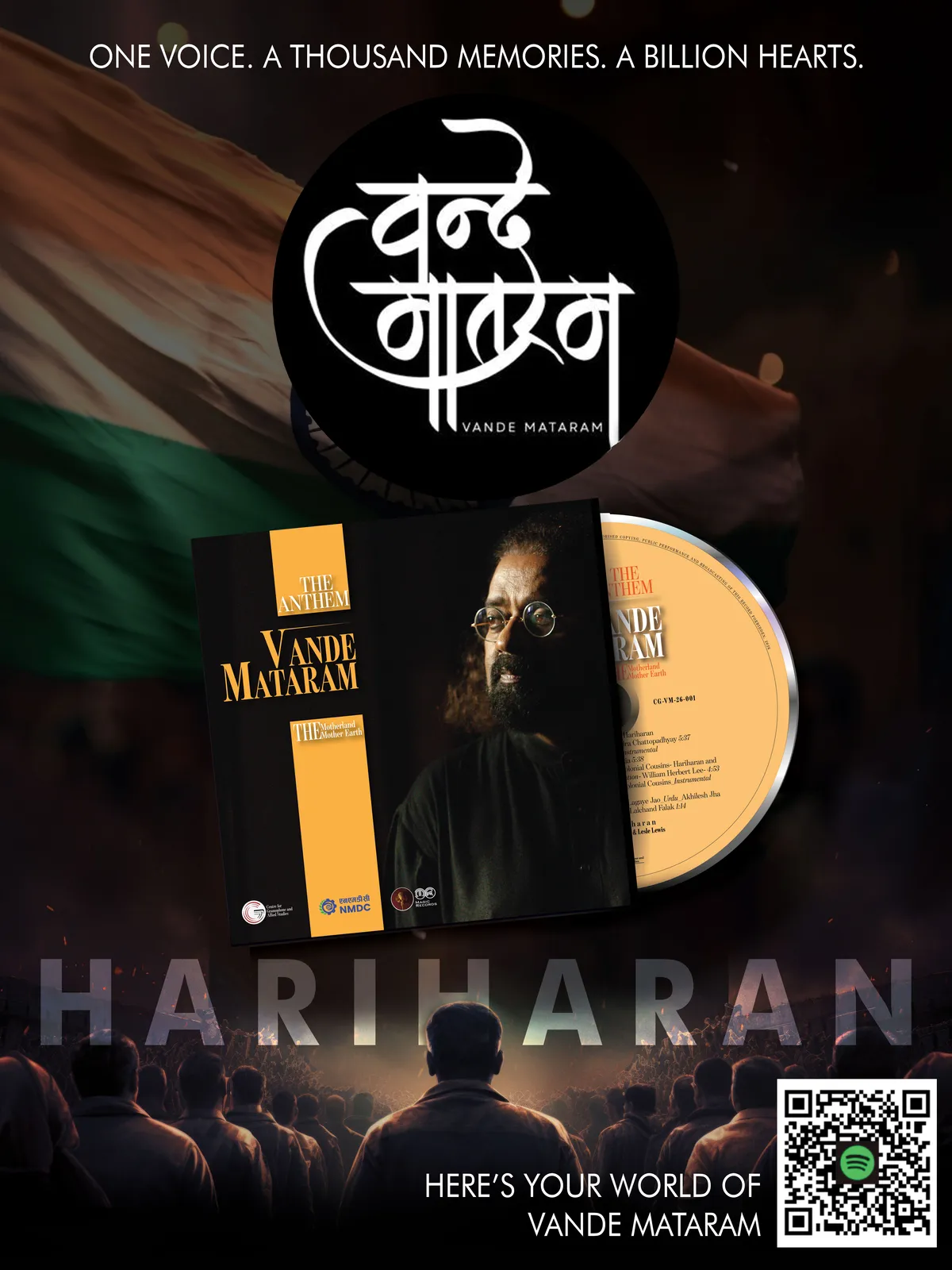
The Anthem: Hariharan's Vande Mataram
In the 150th year of Vande Mataram, a new album returns to the song in the original, in Tamil, in English and in forms it has not been heard in before.
A song with a long recorded history
Rishi Bankim Chandra Chattopadhyay's Vande Mataram was first recorded in 1905. In 1938, at the request of Netaji Subhas Chandra Bose, Timir Baran gave the complete song a full musical setting. For many who sang it, the song was a call to freedom and a stand against injustice.
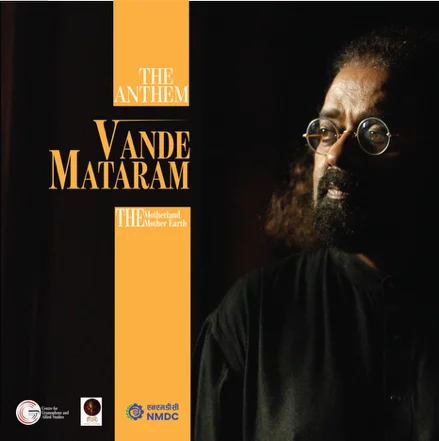
The Anthem: Vande Mataram adds to that history. Released on 14 September 2026, the album carries music by Hariharan and was curated by the Centre for Gramophone and Allied Studies (CeGRAMS), which has spent the song's 150th year working to bring its musical journey back into public memory.
Bankim Chandra's original, in a new setting
Hariharan gives Bankim Chandra's original a new musical interpretation and sings it himself. The album also carries an instrumental version of this composition, credited to Rakesh Chaurasia.
Subramania Bharati's Tamil rendering
Mahakavi Subramania Bharati's Tamil rendering of the song appears here set in Raga Mohanam, sung by Hariharan. Its instrumental version is credited to Soundara Rajan, Bhavyalakshmi and Josy Alappuzha.
Colonial Cousins and a translation from 1906
The English version was composed and sung by Colonial Cousins, the duo of Hariharan and Leslie Lewis. Its words come from William Herbert Lee, an Indian Civil Service officer who translated Vande Mataram into English in 1906.
For many listeners, this will be the first time they hear the song in English, and it gives Vande Mataram a way to reach people well beyond India. Leslie Lewis is credited on the English instrumental.
Two taranas and an electronic interpretation
The album also returns to two Vande Mataram taranas from India's revolutionary tradition. Bande Mataram Ke Naare Lagaye Jao sets verses by Lala Lalchand Falak of Lahore, sung by Akhilesh Jha with vocal refrains by Hariharan. Tarana Bande Mataram Hindustani is sung by Hariharan.
Akshay Hariharan, his son, contributes an electronic interpretation that brings the invocation into the musical language of a younger generation.
The recordings
Vande Mataram (Original), Hariharan
Vande Mataram (Original, instrumental), Rakesh Chaurasia
Vande Mataram (English), Hariharan and Leslie Lewis
Vande Mataram (English, instrumental), Leslie Lewis
Bande Mataram Ke Naare Lagaye Jao, Akhilesh Jha
Vande Mataram (Tamil), Hariharan
Vande Mataram (Tamil, instrumental), Soundara Rajan, Bhavyalakshmi and Josy Alappuzha
Vande Mataram (Electronic), Akshay Hariharan
Tarana Bande Mataram Hindustani, Hariharan
Vande Mataram at Hindi Diwas 2026
The album arrives while the song is also the subject of discussion in Mumbai. Hindi Diwas 2026 and the 6th All India Official Language Conference in Navi Mumbai include a session centred on Vande Mataram, in which Hariharan joins senior journalist and writer Nilesh Mishra and Akhilesh Mishra, who is studying the song. Joydeep Chattopadhyay, a fifth-generation descendant of Bankim Chandra Chattopadhyay, is also part of the programme, as reported by Deccan Herald.
Listen to The Anthem
The Anthem: Vande Mataram is available in full on Spotify, including the English version by Hariharan and Leslie Lewis. More of his recorded work is gathered in the discography.